What is a Switching Power Supply and How Does it Work?
The Switching Power Supply (SPS) is a vital component in modern electronics. Its efficiency and compact design have revolutionized power management. According to a recent report by MarketsandMarkets, the SPS market is expected to reach $30.19 billion by 2025. This growth highlights its significance in various applications, from consumer electronics to industrial equipment.
Switching Power Supplies convert electrical power more efficiently than their linear counterparts. They operate by rapidly switching input voltage on and off. This process reduces energy loss, making SPS ideal for devices that require a stable power output. However, while SPS offers several benefits, challenges remain. Issues like electromagnetic interference require careful circuit design and shield implementation.
The benefits of Switching Power Supplies cannot be overlooked, but the design process is not flawless. Developers often face trade-offs between efficiency and reliability. As technology evolves, so do the challenges in creating the next generation of SPS. Understanding these complexities is essential for engineers and manufacturers.
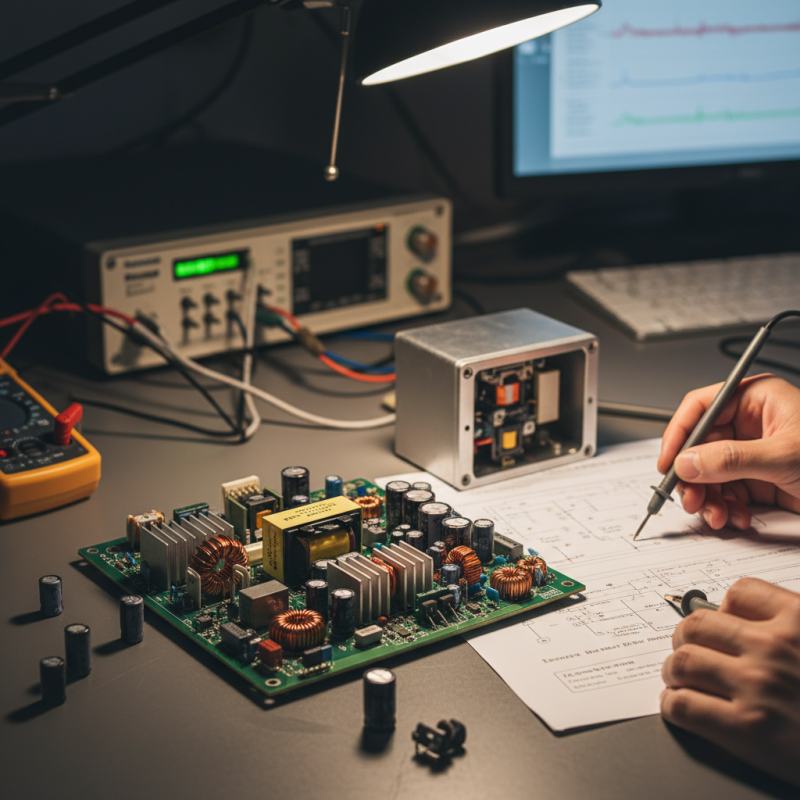
What is a Switching Power Supply?
A switching power supply is an essential component in many electronic devices. It converts electrical power efficiently. Unlike traditional power supplies, it uses a high-frequency switching method. This process drastically reduces energy loss. The result is a lightweight and compact unit.
Inside a switching power supply, several components work together. You have the input rectifier, which converts AC to DC. Then, the high-frequency switching transistors take over. They create pulses of electricity that can be transformed into the desired voltage. It’s fascinating how these components interact to deliver reliable power. Yet, designing them isn’t always straightforward.
However, they do come with certain challenges. Electromagnetic interference (EMI) can be an issue. This might require additional filtering components. Also, producing compact designs that manage heat effectively can be tricky. Engineers must consider trade-offs between size and efficiency. Despite these challenges, switching power supplies remain a popular choice in modern electronics. Their efficiency and versatility make them indispensable.
Key Components of a Switching Power Supply
A switching power supply is essential in many electrical devices. Understanding its key components helps grasp how it operates. The main parts include a transformer, inductor, diode, and capacitor. Each plays a crucial role in voltage regulation and energy efficiency.
The transformer converts the input voltage to a required level. It provides electrical isolation and minimizes losses. Inductors store energy temporarily, smoothing out voltage fluctuations. Capacitors filter signals, ensuring steady output voltage. Together, they create an efficient power supply system.
Tip: When building or troubleshooting a power supply, pay attention to the choice of components. Quality components yield better performance. Ensure you understand how each component interacts.
The feedback loop is another vital aspect. It monitors output and adjusts controls accordingly. This enhances stability but can introduce complexity. Not all designs successfully balance simplicity and efficiency.
Tip: Always test your circuit before deployment. A small mistake can lead to failure. Use proper tools to measure performance metrics accurately.
How Does a Switching Power Supply Operate?
A switching power supply is an essential component in modern electronics. It converts electrical power efficiently. The main feature is its ability to switch on and off rapidly. This process regulates voltage and current, ensuring stable output.
How does a switching power supply operate? It starts with an AC input that is transformed into DC. Next, it converts DC back into a high-frequency AC signal. This is done using a high-speed switch. Inductors and capacitors filter the signal, smoothing it out. This results in a more efficient energy transfer with less heat generated.
One key aspect to note is efficiency. While switching power supplies are generally more efficient than linear ones, they are not flawless. Some energy is still lost during the conversion process. This inefficiency can lead to heat build-up. Adequate cooling methods are necessary to prevent overheating. Not addressing this can shorten the lifespan of the device. The design remains a challenging area that requires constant improvement and reflection.
Advantages of Using Switching Power Supplies
Switching power supplies have gained popularity for many applications due to their distinct advantages. One key benefit is high efficiency. Unlike traditional power supplies, switching types convert power with minimal energy loss. They use a method that rapidly switches on and off, allowing them to regulate voltage easily. This results in less heat generated. Less heat means longer life span for components.
Another advantage is their compact size. Switching power supplies are generally smaller and lighter than linear power supplies. This makes them ideal for applications where space is limited, such as in laptops or portable devices. Their size can facilitate more efficient designs, but sometimes the compactness leads to overheating issues if not appropriately managed. Balancing size and heat dissipation is crucial here.
Moreover, switching power supplies can operate over a wide range of input voltages. This versatility makes them suitable for different locations and power systems. However, they can sometimes introduce electrical noise, which may disrupt sensitive devices. Designers need to find ways to mitigate this issue, ensuring stable operation without sacrificing the advantages. It's a balancing act that demands careful consideration and design expertise.
Common Applications of Switching Power Supplies
Switching power supplies are widely used in various devices and applications. They convert voltage efficiently, making them ideal for multiple purposes. Common applications include computers, televisions, and industrial equipment. These supplies are preferred for their compact size and high efficiency.
One notable feature of switching power supplies is their ability to handle different input voltages. This flexibility is vital for global products. Many devices can operate in various regions without significant changes. However, this versatility can sometimes lead to inefficiencies if not properly designed.
Tips: Always check the specifications of your switching power supply. Ensure it matches your device's needs. Misusing these supplies can cause malfunctions or reduce their lifespan. While they are reliable, poor choice may result in wasted energy. Always ensure adequate cooling, as overheating can be problematic.