China Top Medical Syringe Manufacturers for Global Buyers
Choosing reliable China Top Medical Syringe Manufacturers requires more than comparing prices or reading polished catalogs. Global buyers need evidence from factory floors, quality records, and real shipment experience. A clear barrel, smooth plunger movement, secure needle connection, and intact sterile packaging can reveal important differences. Small details matter.
Dr. Edward Kelley, former Director of Service Delivery and Safety at the World Health Organization, stated, “Quality health services should be effective, safe, people-centred, timely, equitable, integrated, and efficient.” This principle also applies to every Medical Syringe entering a hospital, clinic, laboratory, or emergency setting. Manufacturers should demonstrate controlled production, validated sterilization, dependable raw materials, and traceable batch records. Compliance with relevant standards, such as ISO 7886 for sterile, single-use syringes, also deserves careful review. Certificates alone are not enough.
This guide introduces leading Chinese manufacturers for international procurement teams. It considers product range, production capacity, export experience, private-label support, inspection procedures, and communication reliability. Some suppliers may offer excellent prices but limited customization. Others may provide strong documentation yet lack flexible delivery schedules. That is where careful comparison becomes practical.
No factory is perfect. No buyer should assume otherwise. Independent audits, sample testing, and shipment verification remain valuable safeguards. A supplier’s website may look impressive, but factory evidence speaks louder. This overview is designed to support informed decisions, not replace professional qualification procedures. In medical procurement, one overlooked detail can affect safety, trust, and long-term supply stability.
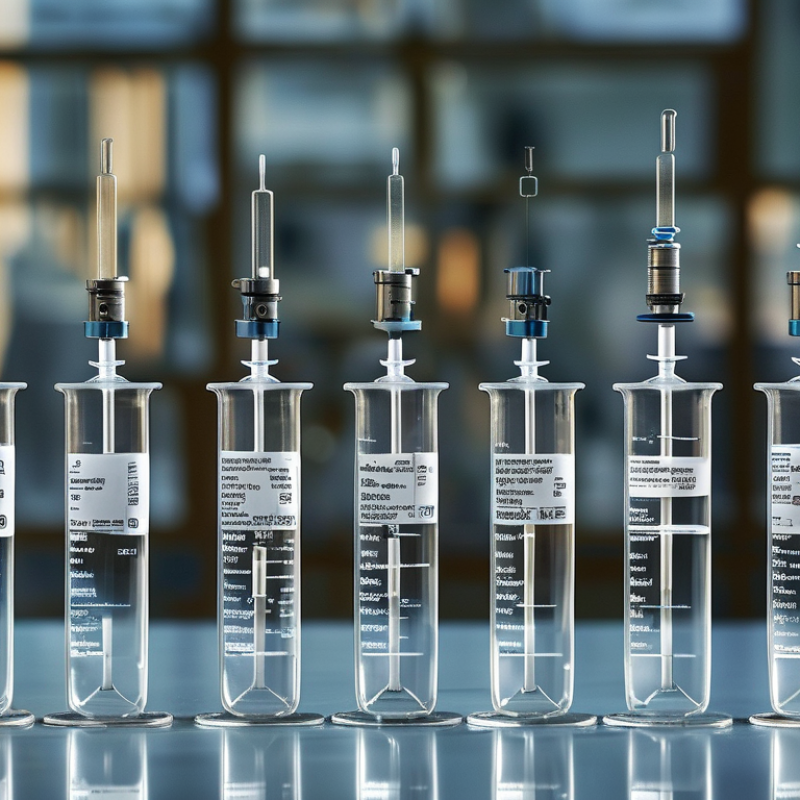
Medical Syringe Manufacturing in China: Industry Scope and Product Types
China’s medical syringe manufacturing sector spans raw materials, molding, assembly, sterilization, packaging, and export support. Production commonly uses medical-grade polypropylene, elastomers, stainless steel, and protective packaging films. Many factories serve hospitals, laboratories, clinics, and distributors through contract manufacturing or customized orders. Their technical scope may include tooling, automated assembly, cleanroom control, and batch traceability. Material selection matters.
Product categories include two-part and three-part disposable syringes, insulin syringes, tuberculin syringes, safety syringes, catheter-tip syringes, and oral dosing syringes. Some manufacturers also produce prefilled syringe components or specialized irrigation designs. Differences appear in barrel capacity, graduation accuracy, needle gauge, hub design, gasket material, and dead-space volume. These details affect handling and dose control. Small changes matter.
For global buyers, reliable evaluation should examine ISO 13485-based quality systems, applicable ISO 7886 testing, sterilization validation, and documented production records. Factory audits should review cleanroom monitoring, incoming-material checks, leakage tests, plunger-force testing, and packaging integrity. Samples should be tested under realistic conditions, not only inspected visually. A low quotation can hide weaker documentation or inconsistent tolerances. This is often overlooked. No factory is perfect, and even experienced buyers can overvalue appearance while missing batch variation. Clear specifications, retention samples, and corrective-action procedures create stronger purchasing decisions.
Key Quality Standards for Chinese Syringe Manufacturers
For global buyers, evaluating Chinese syringe manufacturers starts with documented quality control, not a polished catalog. A capable factory should operate under ISO 13485, with controlled procedures, trained staff, and traceable batch records. Product testing should reflect ISO 7886 and ISO 7864 requirements where applicable. These standards cover syringe performance, dimensions, graduation accuracy, and needle-related specifications. Ask for current certificates and verify their scope. A certificate alone proves very little.
Look closely at production details. Injection molding should control barrel clarity, flange strength, and plunger movement. Inspectors should test leakage, breakage, dead space, and smooth operation across sampled batches. Materials also need biocompatibility evidence under relevant ISO 10993 evaluations. Sterilization requires validated cycles, routine monitoring, and secure package integrity. Small defects matter. A loose cap or unclear graduation can affect clinical use. It can also reveal weak process control.
Reliable manufacturers welcome on-site audits and provide corrective-action records. Review incoming material checks, cleanroom controls, calibration logs, and employee training files. Packaging should show lot numbers, expiry dates, sterilization status, and storage conditions. Requirements vary by destination market, so buyers must confirm local regulatory expectations independently. No factory is flawless. The better question is whether problems are detected early, documented honestly, and corrected permanently. Sometimes, one missing record deserves more attention than an attractive production line.
Production, Sterilization, and Export Compliance Processes
China’s leading medical syringe manufacturers treat production as a controlled, traceable process. Medical-grade polypropylene is checked before molding, while needle dimensions and barrel clarity are inspected during assembly. Each batch should carry a lot number, operator record, and material traceability file. Automated vision systems can detect graduation defects, but trained inspectors still review samples. Machines are useful, not infallible.
Sterilization depends on product design and packaging. Ethylene oxide may suit heat-sensitive components, while radiation can support certain packaged products. The selected method requires validated cycles, biological indicators, residual testing, and routine monitoring. Sterile barrier packaging also needs seal-strength and integrity checks. A supplier should provide sterilization records and certificates linked to the exact batch. One certificate cannot cover every market or product variation.
Tips: Ask for the quality agreement, process validation summary, ISO 13485 evidence, and recent batch records. Confirm whether testing is performed internally or by an independent laboratory. Export compliance also requires accurate labeling, technical files, customs documents, and destination-market registration support. Requirements differ by country, so buyers should verify them with qualified regulatory professionals. A polished factory visit proves little by itself. Small documentation gaps can delay shipment, and experienced suppliers acknowledge this risk instead of promising effortless compliance.
Procurement Risks and Best Practices for International Buyers
Selecting top medical syringe manufacturers requires more than comparing prices. International buyers should verify production experience, quality management, product specifications, and export records. A supplier may present a polished factory tour, yet its batch controls can still be weak. Ask for recent test reports, sterilization records, material declarations, and lot traceability. Confirm that needle size, barrel graduation, plunger fit, and packaging match the intended clinical use.
Procurement risks often appear after payment. Unclear tolerances may cause leakage or inaccurate dosing. Inconsistent packaging can damage sterile products during long-distance transport. Buyers should approve pre-production samples and inspect random cartons before shipment. Contracts should define acceptance criteria, shelf life, replacement duties, and document requirements for the destination country. A lower quotation is not always economical. Sometimes, it hides testing gaps or weak after-sales support. This deserves honest review.
Tips: Check certificates independently. Request three recent production samples. Compare sample quality with mass production. Use an inspection agency when practical. Keep written records of every specification. Do not rely on verbal promises. Build buffer time into shipping plans. Even experienced teams miss details, especially when procurement moves too quickly.